
Discovering the know-how of the craftsmen of the Christian Etienne brand
Movement restoration explained by Christian Etienne
Diagnosis and disassembly
After a thorough examination of the vintage calibre to assess the overall condition of its components, I proceed with a complete disassembly followed by deep cleaning of the movement. Each part is inspected individually to ensure reliability. Damaged, worn, or defective elements are either restored or replaced with original parts whenever possible, in order to preserve the authenticity of the movement.
Decoration and rhodium plating
For the decoration, I start by satin-finishing the sides of the bridges, then polish the angles and manually lap the upper surface using an abrasive paste applied to a frosted glass plate. This operation, which may seem simple, requires true craftsmanship to achieve a regular, fine, and scratch-free finish.
The main plate is then rhodium-plated to protect the surface and allow light to penetrate the movement. This treatment gives the calibre remarkable depth and creates an elegant contrast with the bridges treated in 5N rose gold.
Bluing and final touches
Next comes the manual bluing of the regulator assembly and screws. The screws are placed on a brass plate perforated with holes, then heated with the flame of a small alcohol lamp until the desired blue shade is reached. For the regulator assembly, I use a sand-covered palette to ensure even heat distribution and gradual temperature rise.
This shade of blue, often associated with serenity, wisdom, and dreams, plays subtly between shadow and light.
Finally, the ratchet wheel is laser-engraved with the C-E logo, symbol of my commitment.
A new life for a legendary movement
In this era of circularity, such restoration gives new life to an emblematic vintage movement. I am honored and proud to restore its former glory, while perpetuating the tradition and excellence of mechanical watchmaking.

Before restoration

After restoration
Making the case

The process begins with a technical drawing of the case. An essential component, it will be the guardian of the movement and protect it from water and humidity.
Taking into account the technical and aesthetic specificities of the case and on the basis of the technical drawings drawn up, the various swage are manufactured. These swage will be used to cut out the case middle, bezel and case back that make up the entire case. The case middle, made from 316L steel, is cold-cut from 8-millimetre-thick plates using a 150-ton press !
It takes 4 operations to produce the central part of the case :
- FIRST OPERATION: cut the outer part of the central part of the case from a steel strip
- SECOND OPERATION: refine the exterior by passing the central part of the case through a second tool.
- THIRD OPERATION: cut out the central part
- FOURTH OPERATION: repeat the external refining process a second time to obtain the best possible finish, so that the part can be machined correctly and there are no problems with deformation.
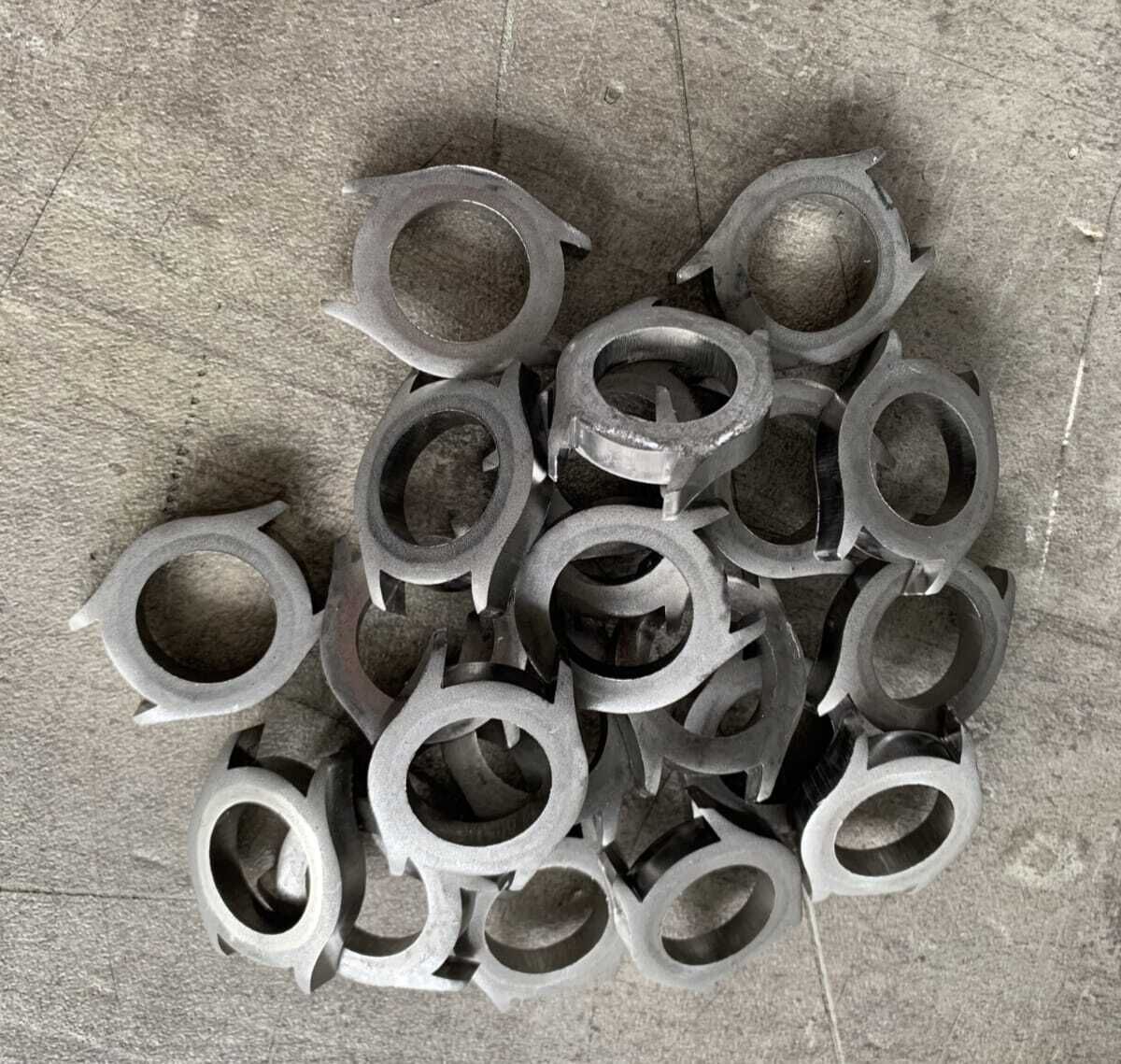
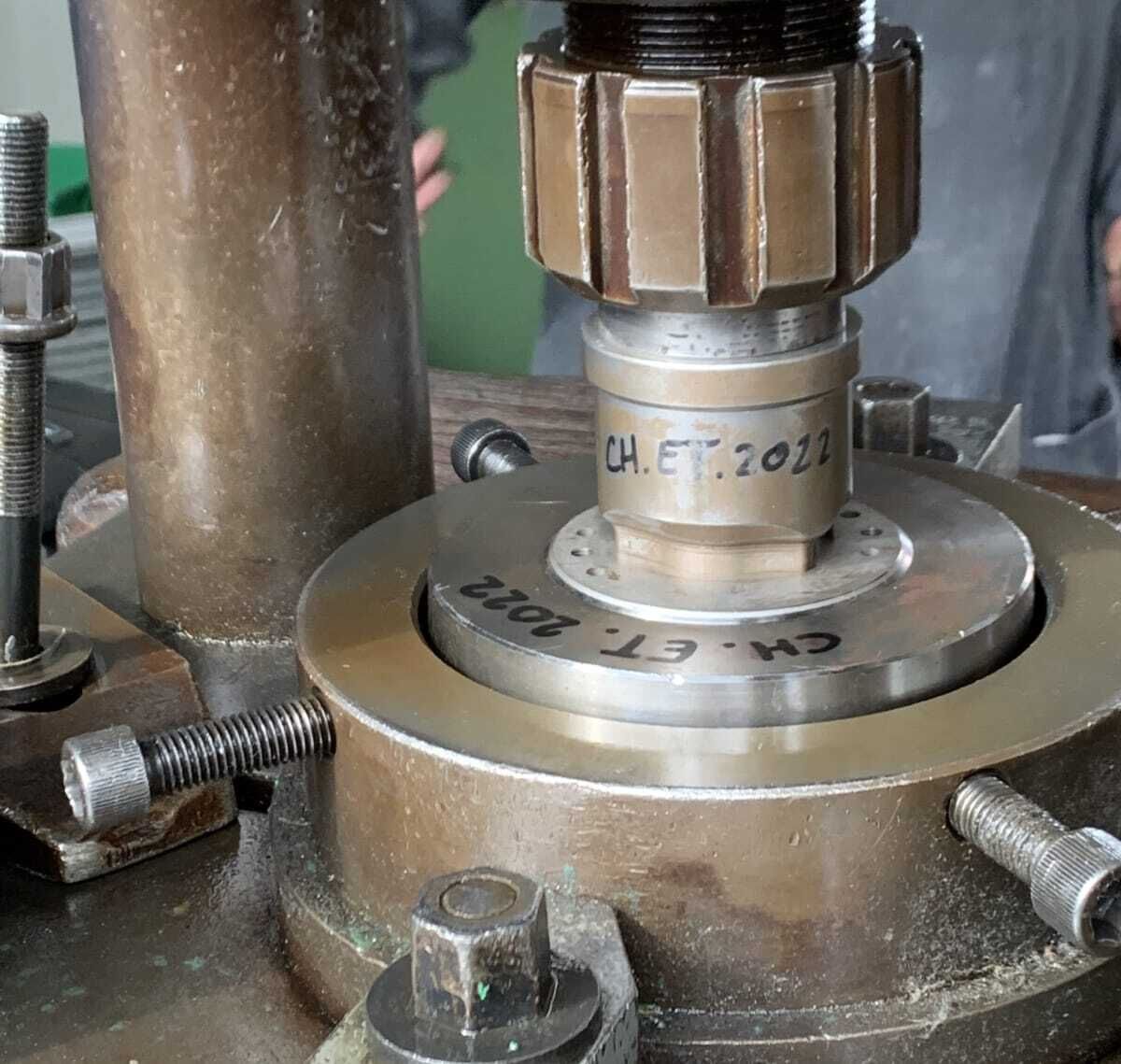
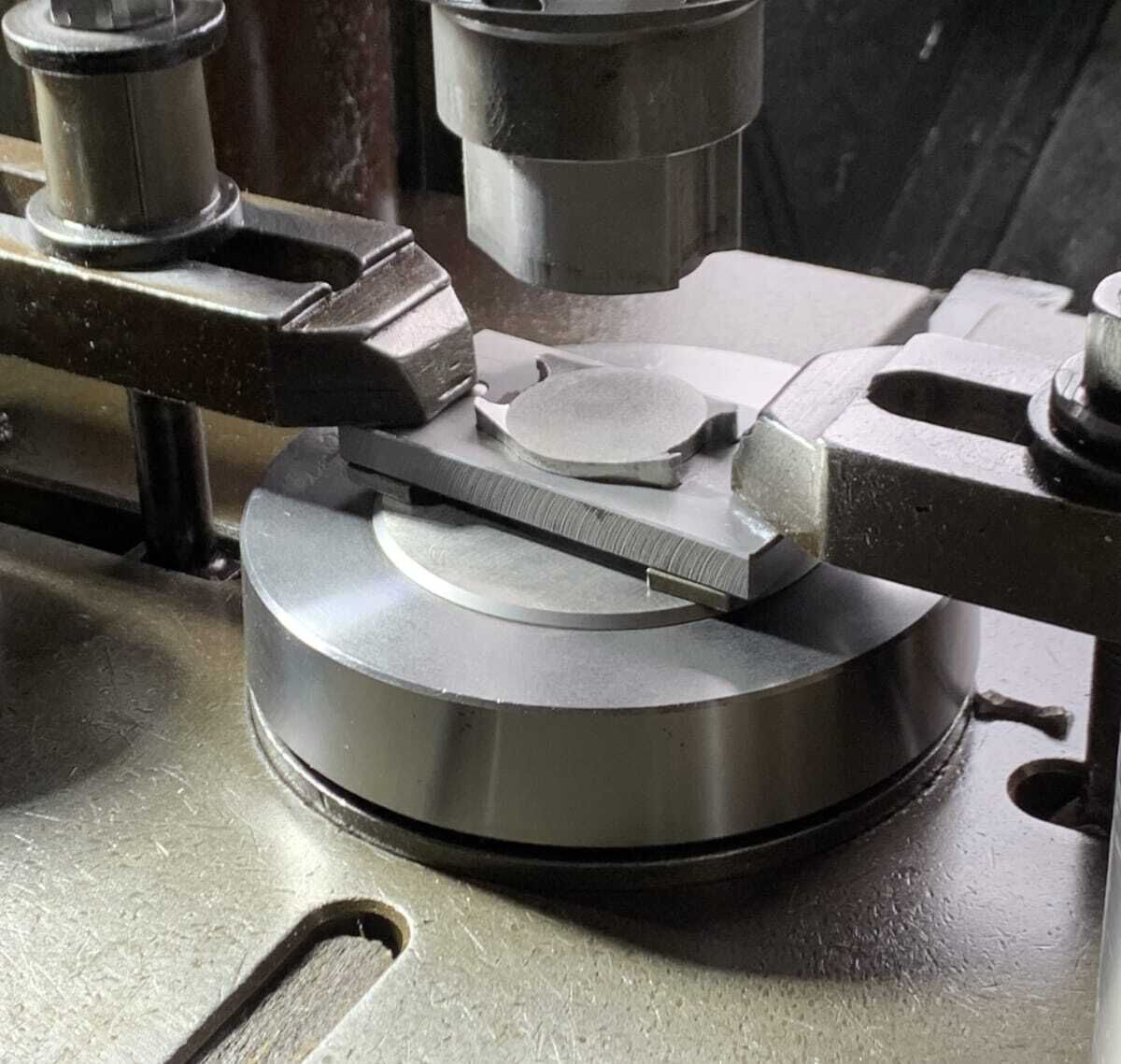
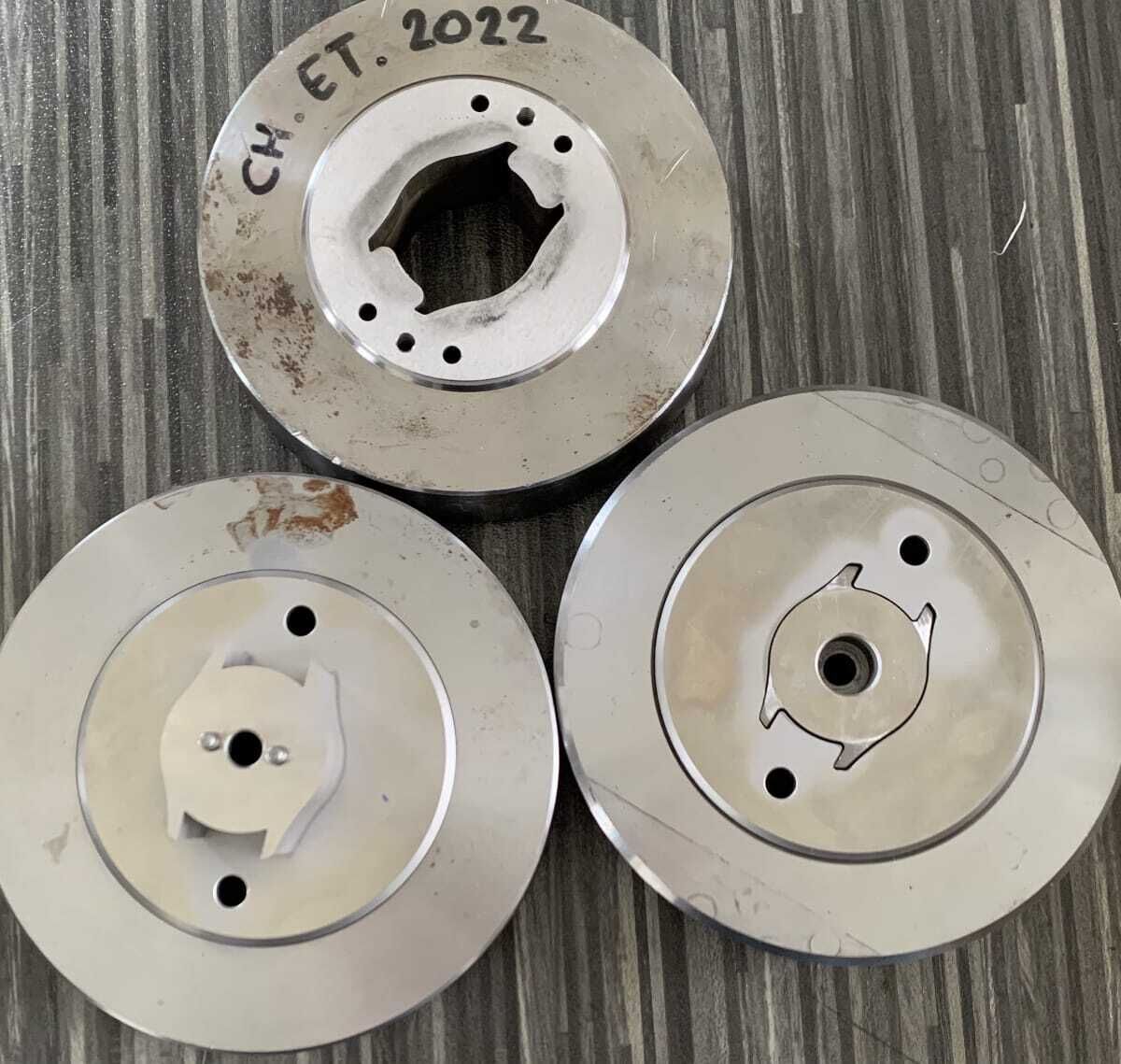
To bring the rough to its final dimension, we then proceed to milling and turning operations. This is a time-consuming process to achieve the exact dimensions required.
A polisher is then called in for the satin-finishing and polishing operations.
The lapping of the bridges
Lapping is delicate work that requires a gentle but firm hand.
The decoration is carried out using a paste made up of particles of diamond dust or corundum (crystallised alumina powder) with a choice of different grain sizes. The choice of paste depends on the component to be lapped and the level of finish required.
The paste is first spread evenly over an area of a glass or metal plate, then the part is moved in circular movements, exerting gentle pressure. To ensure successful lapping, it is essential to constantly clean the paste and check the workpiece with a magnifying glass throughout the process. If too much pressure is applied, the original engraving on the bridges will be completely erased and the component will be unusable. If too little pressure is applied, the result will be uneven.

Making the dial


Once the dial design has been completed, the first step in bringing the dial to life is to create a brass blank. The surface treatment work can now begin. A primer coat is applied, followed by the application of the desired color. Once the dial is dry, the numerals, indexes and other dial markings are printed using the special stamping technique.
The dial markings to be printed are engraved on a polished steel plate. The depressions formed in the plate are filled with paint in the color or colors chosen for the dial. A transfer pad, a kind of balloon made of flexible silicone rubber, is then used to press the markings onto the dial. This very traditional technique is an art form in itself. It requires great precision and becomes increasingly complex and delicate as more colors are added to the surface of the dial.


Hand Blueing
The process of hand blueing begins by heating the hand on a layer of sand over the flame of a small spirit-lamp. Once the right temperature and color have been reached, the hand is removed from the sand and allowed to cool slowly to room temperature.
As it is impossible to heat the thicker parts of the hand in the same way as the thinner parts, hand-blued needles are instantly recognizable. The result is a chromatic shift between light and dark shades of blue. What's more, this very delicate color change will be different for each identically made hand, even if they have the same shape.
